- Why Valentine’s Day Marketing Campaigns Perform Exceptionally Well
- Case Study Insight 1: Personalisation Over Promotion
- Case Study Insight 2: User-Generated Content Builds Authenticity
- Case Study Insight 3: Urgency Without Pressure
- Case Study Insight 4: Inclusive Valentine’s Day Messaging
- Case Study Insight 5: Short-Form Video Storytelling
- Common Patterns Across Successful Valentine’s Day Campaigns
- Valentine’s Day Campaign Ideas Businesses Can Adapt
- Learning From What Didn’t Work
- Applying These Lessons for Valentine’s Day 2026
- Conclusion: Turning Insights Into Impact
Valentine’s Day has evolved into one of the most emotionally driven moments in the global marketing calendar. It’s no longer just about selling gifts—it’s about creating meaningful connections, memorable experiences, and stories that customers want to be part of.
Brands that understand this consistently run Valentine’s Day marketing campaigns that generate high engagement, strong sales, and long-term loyalty.
By analysing Valentine’s Day marketing campaigns that truly worked, businesses can move beyond guesswork and design smarter, more human campaigns for 2026.
This article explores real-world campaign patterns, successful examples, and key lessons brands can apply to their own Valentine’s Day strategies.
Why Valentine’s Day Marketing Campaigns Perform Exceptionally Well
Valentine’s Day stands out because purchasing decisions are deeply emotional. Customers aren’t comparing features or prices alone—they’re looking for reassurance that their choice expresses care, thoughtfulness, or self-love.
Several factors contribute to the strong performance of Valentine’s Day campaigns:
- A clear deadline that creates urgency
- High gifting intent across multiple audiences
- Increased social media activity and content sharing
- Greater receptiveness to emotional messaging
When brands tap into these motivations with the right tone, results follow naturally.
Case Study Insight 1: Personalisation Over Promotion
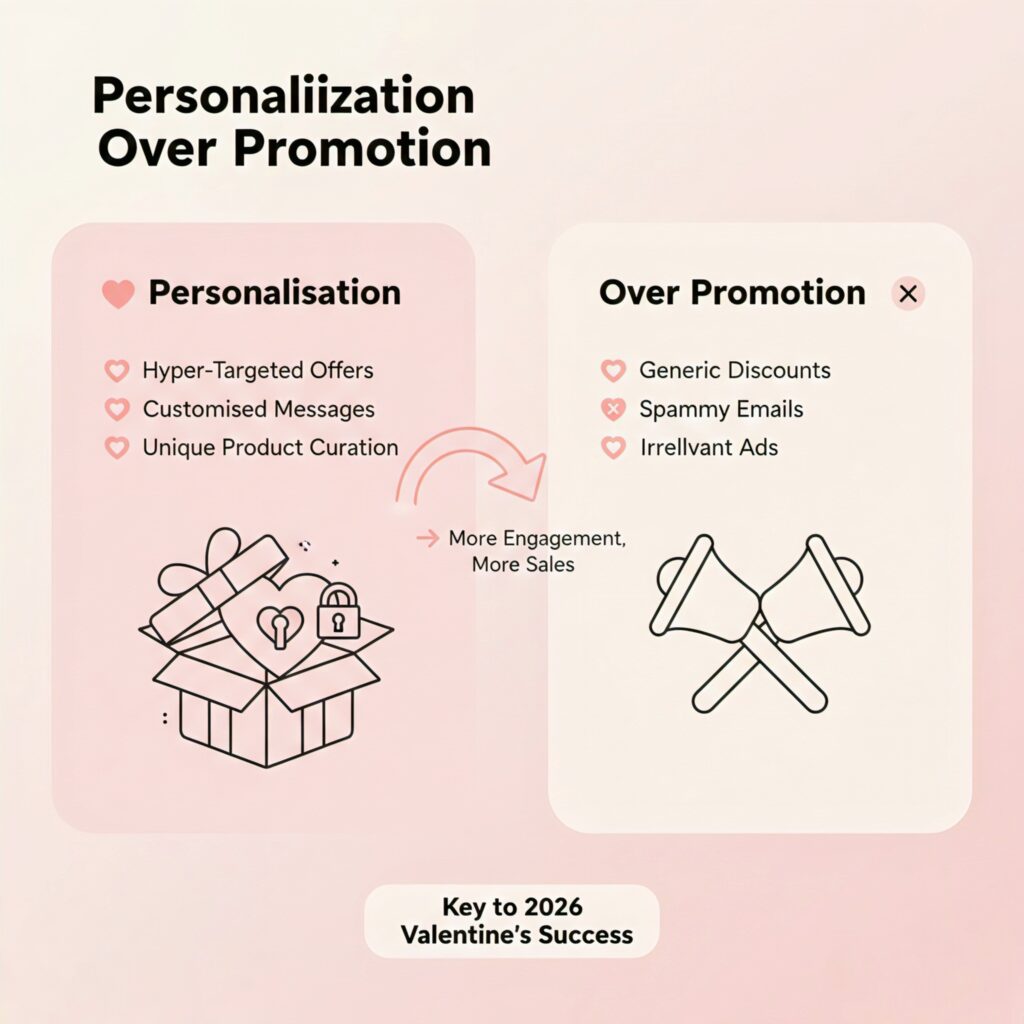
One of the most effective Valentine’s Day marketing campaigns in recent years focused on personalisation instead of discounts. Rather than pushing blanket offers, the brand tailored its messaging to individual customer behaviour.
The campaign segmented audiences based on past purchases and preferences, delivering customised email content depending on whether customers were shopping for partners, friends, or themselves. Subject lines included names, while product suggestions reflected browsing history.
This approach resulted in higher email open rates, improved click-through performance, and increased repeat purchases even after Valentine’s Day ended.
Lesson for 2026: Customers expect brands to recognise them as individuals. Even basic personalisation creates trust and drives stronger engagement than generic promotional messaging.
Case Study Insight 2: User-Generated Content Builds Authenticity
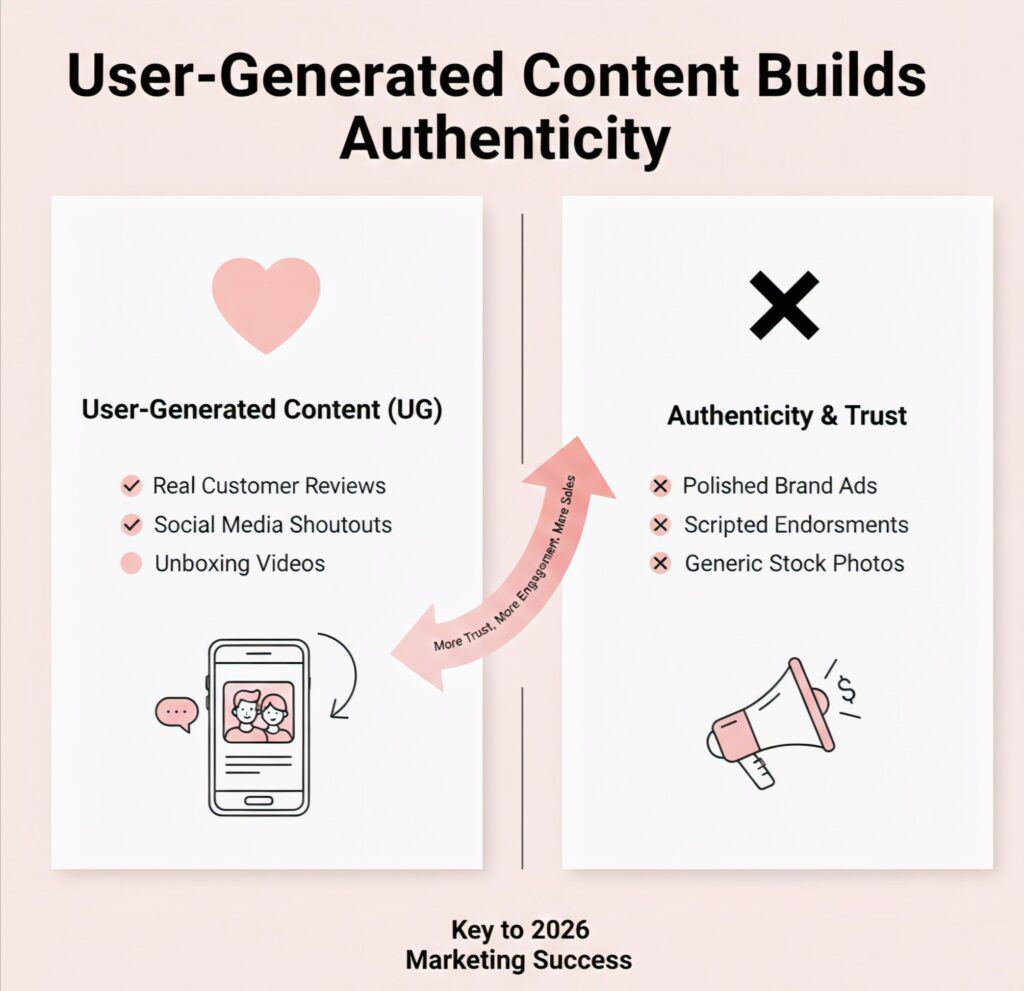
Another Valentine’s Day campaign that stood out relied heavily on user-generated content rather than polished advertising. Customers were encouraged to share their own stories, photos, and experiences using a dedicated campaign hashtag.
The brand took a minimal branding approach, letting customer voices lead the narrative. This made the campaign feel authentic, relatable, and emotionally real—qualities that audiences increasingly value.
The result was widespread organic reach, high engagement across social platforms, and a noticeable boost in brand trust.
Lesson for 2026: People trust people more than ads. Encouraging customers to tell their own stories can outperform even the most well-produced campaigns.
Case Study Insight 3: Urgency Without Pressure
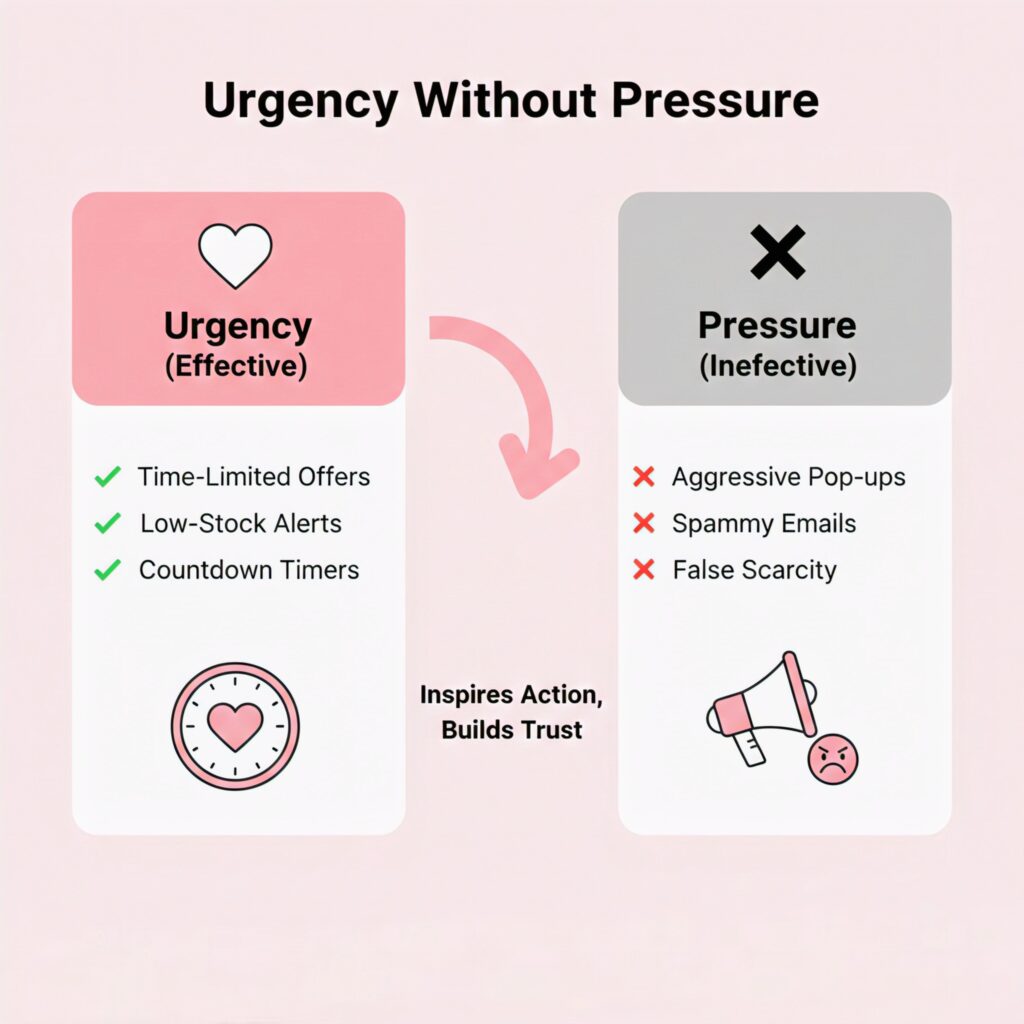
While urgency is a powerful marketing trigger, aggressive sales tactics often backfire during emotionally sensitive occasions like Valentine’s Day. Some of the most successful campaigns used urgency gently, positioning offers as helpful solutions rather than time-bound pressure.
These campaigns focused on curated bundles, convenience-based messaging, and soft countdown reminders. Instead of “Buy Now or Miss Out,” the messaging felt more like “We’ve made this easier for you.”
As a result, brands saw higher conversion rates, fewer abandoned carts, and more positive customer sentiment.
Lesson for 2026: Urgency works best when it reduces stress. Customers respond better to calm, solution-focused messaging than aggressive sales language.
Case Study Insight 4: Inclusive Valentine’s Day Messaging
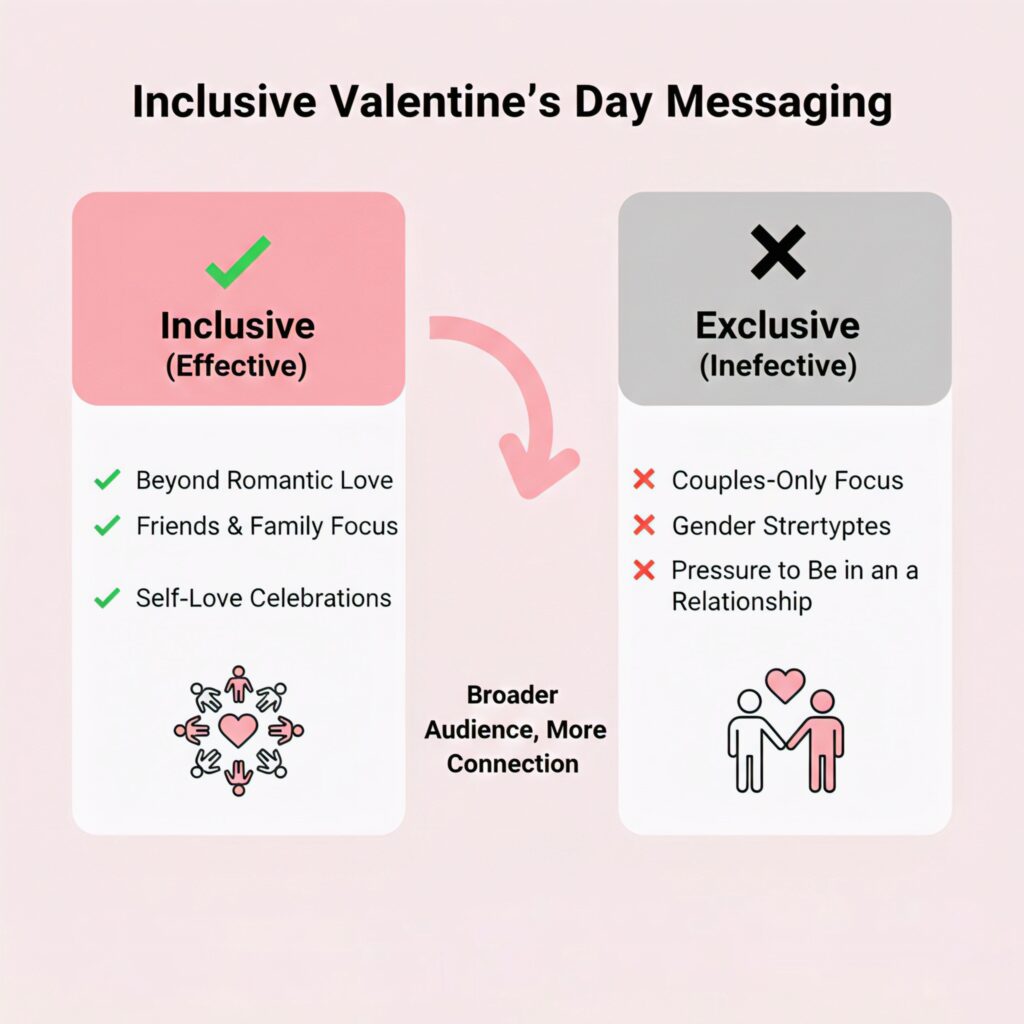
One of the biggest shifts in recent Valentine’s Day marketing has been the move towards inclusivity. Brands that expanded their messaging beyond romantic couples connected with a much wider audience.
Successful campaigns celebrated self-love, friendships, family bonds, and personal milestones. Products were positioned as meaningful gifts for anyone—not just romantic partners.
This inclusive approach increased audience reach, strengthened emotional connection, and improved overall brand relevance.
Lesson for 2026: Valentine’s Day isn’t just about romance. Inclusive messaging allows brands to connect with diverse customer segments without alienating anyone.
Case Study Insight 5: Short-Form Video Storytelling
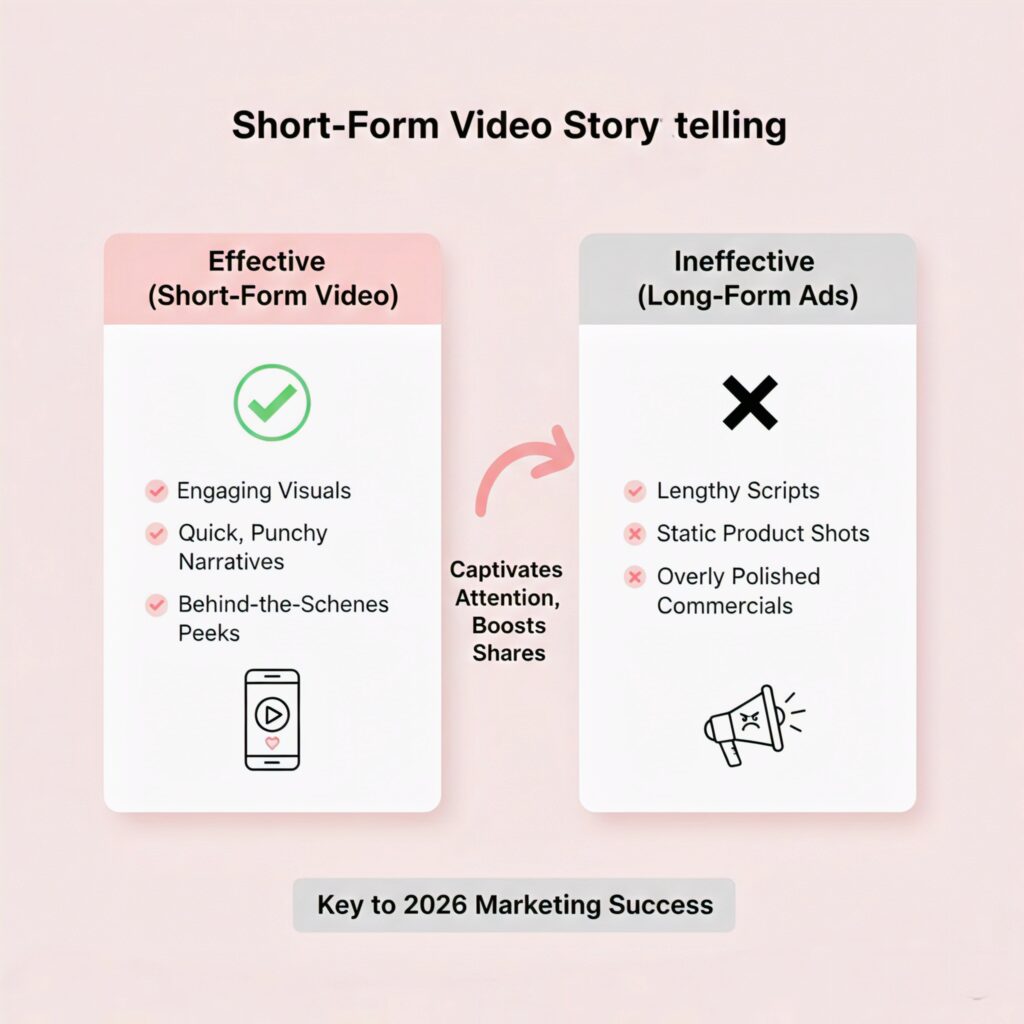
Short-form video has become one of the most effective formats for Valentine’s Day marketing. Brands that used quick, emotionally engaging videos performed particularly well on social platforms.
These videos often showed relatable moments—last-minute gift decisions, small gestures of love, or behind-the-scenes brand stories. The focus wasn’t on selling but on storytelling.
High completion rates, increased sharing, and strong brand awareness were common outcomes.
Lesson for 2026: Attention spans are short. Emotional stories told visually and quickly are far more effective than long promotional messages.
Common Patterns Across Successful Valentine’s Day Campaigns
When analysing multiple campaigns together, several consistent patterns emerge.
High-performing Valentine’s Day campaigns usually:
- Begin planning early but peak close to the date
- Lead with emotion rather than price
- Focus on customer experience over short-term sales
- Maintain consistent messaging across email, social, and paid channels
These elements form the foundation of campaigns that feel natural rather than forced.
Valentine’s Day Campaign Ideas Businesses Can Adapt
Not every business has access to large budgets, but strong ideas scale well.
Some adaptable campaign formats include:
- “Last-minute Valentine’s solutions” content
- Personalised gift guides by personality type
- Interactive quizzes or polls
- Story-led email sequences instead of single promotions
These ideas work across industries and help brands stand out without relying on discounts.
Learning From What Didn’t Work
Equally important are the lessons from campaigns that failed to gain traction.
Common reasons include:
- Overused clichés without originality
- Ignoring customer data and behaviour
- Launching campaigns too late
- Focusing only on discounts
Avoiding these mistakes helps protect brand credibility and marketing budgets.
Applying These Lessons for Valentine’s Day 2026
As brands plan for 2026, success will come from smarter preparation rather than louder marketing.
Focusing on data-driven personalisation, emotional storytelling, inclusive messaging, and early testing allows campaigns to evolve naturally. Valentine’s Day should be treated as a relationship-building opportunity, not just a single sales event.
Conclusion: Turning Insights Into Impact
Valentine’s Day marketing success isn’t about copying past campaigns—it’s about understanding why they worked. The strongest campaigns balanced emotion, relevance, and timing in a way that felt genuinely human.
By studying Valentine’s Day marketing campaigns that worked, businesses can create more meaningful, engaging, and profitable campaigns for 2026. When brands prioritise empathy and creativity, stronger connections—and better results—follow naturally.
Related Blogs:
Valentine’s Day Marketing Ideas for Businesses
7 Creative Valentine’s Ideas to Boost Your Small Business Sales
Viral Marketing Strategies in 2026 (What’s Actually Working, Not Just Talk)