Search behaviour is changing as people look for quick, direct, and useful answers online. Businesses now need to understand how their content can appear in search results and how it can be selected for answer-based experiences. This is where the discussion around SEO vs AEO becomes important.
Traditional search engine optimization helps websites improve their visibility and attract relevant visitors. Answer-focused optimization helps content provide clear responses to specific questions. Both approaches aim to connect users with useful information, but they work in different ways.
For businesses, understanding these differences can help build a more effective digital marketing strategy. DT Digital Hub helps businesses understand digital marketing opportunities and improve their online presence through suitable optimisation practices.
What Is SEO?
Search Engine Optimization (SEO) is the process of improving a website so that its pages can appear more prominently in relevant search results. It involves understanding what users search for and creating content that matches their needs.
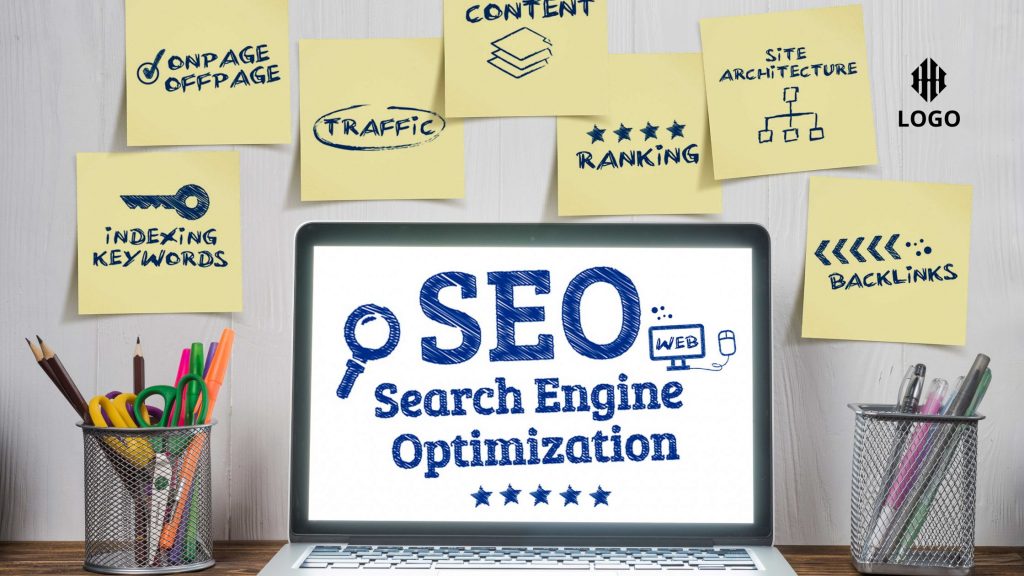
SEO includes several activities, such as keyword research, on-page optimisation, technical improvements, content development, and link building. These activities help search engines discover, understand, and evaluate website content.
For example, a business offering professional services may publish a detailed page explaining its services, benefits, pricing factors, and frequently asked questions. When the page answers user needs effectively and follows sound SEO practices, it has a better opportunity to attract relevant organic traffic.
Key Elements of SEO
- Keyword research: Identify the terms and questions potential customers use when searching online.
- On-page optimisation: Improve page titles, headings, URLs, internal links, and content structure.
- Technical SEO: Help search engines crawl and index website pages correctly.
- Content quality: Publish original, accurate, and useful information that satisfies search intent.
- Link building: Earn relevant links that can support website authority and discovery.
SEO remains important because businesses need a strong website foundation before expanding into other forms of search visibility.
What Is AEO?
Answer Engine Optimization (AEO) focuses on making content easy to understand, extract, and use when a system responds directly to a user’s question. Instead of concentrating only on traditional search listings, AEO considers how clearly a page answers specific questions.
For example, a page about digital marketing costs could explain the main pricing factors, common service options, and budgeting considerations in separate sections. Clear headings and concise explanations make the information easier to interpret.
Understanding SEO vs Answer Engine Optimization helps businesses recognise that ranking a page and having its information selected for a direct answer are related but different outcomes.
Key Elements of AEO
- Direct answers: Respond to common questions clearly and accurately.
- Question-based headings: Organise information around what users want to know.
- Structured content: Use logical headings, short paragraphs, lists, and tables where helpful.
- Reliable information: Support important claims with accurate details and relevant sources.
- Structured data: Use suitable schema markup when applicable to help systems interpret page information.
Answer Engine Optimization does not guarantee that content will be selected for an answer. It improves clarity and accessibility, which can make useful information easier to interpret.
SEO vs AEO: Main Differences
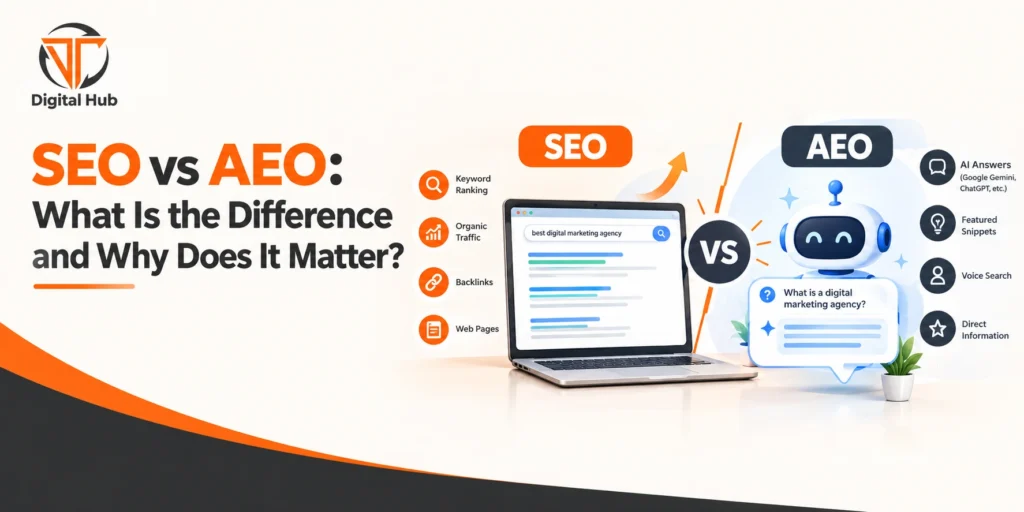
Although both approaches support online visibility, their immediate goals and content requirements can differ. SEO often focuses on helping pages rank in search results, while AEO places additional emphasis on answering questions in a direct and understandable format.
| Factor | SEO | AEO |
| Main goal | Improve organic search visibility | Make content suitable for direct answers |
| Content focus | Search intent and comprehensive information | Clear responses to specific questions |
| Content structure | Relevant headings and organised pages | Question-led headings and concise answers |
| Success indicators | Rankings, clicks, organic traffic, conversions | Answer visibility where measurable, citations, referral visits |
| Technical approach | Crawlability, indexability, page performance | Clear content structure and suitable structured data |
| User experience | Helps users discover relevant pages | Helps users find specific information quickly |
The comparison of Answer Engine Optimization vs SEO shows why businesses should consider both approaches rather than treating them as competing strategies.
How AEO Works in Digital Marketing
Understanding how AEO works in digital marketing starts with identifying the questions customers ask before making a decision. Content should address those questions directly and provide enough context for users to understand the answer.
For example, a service page can explain what a service includes, who needs it, what affects its cost, and how to evaluate available options. Each section should provide useful information instead of repeating the same keywords.
AEO strategies for businesses can include creating question-and-answer sections, improving existing articles, adding relevant structured data, and keeping important information accurate. These practices can also improve the overall usefulness of a website.
Practical Steps to Improve AEO
1. Research customer questions
Review customer enquiries, sales conversations, and relevant search queries to identify common concerns. Use these questions to plan helpful content rather than creating pages around keywords alone.
2. Answer questions early
Start each relevant section with a direct answer before adding supporting details. This helps readers understand the main point without searching through long paragraphs.
3. Organise information clearly
Use descriptive headings, short paragraphs, bullet points, and tables where appropriate. A clear structure supports readability and makes individual topics easier to understand.
4. Add relevant structured data
Use schema markup only when it accurately represents the visible page content and meets applicable guidelines. Structured data can clarify information, but it does not guarantee enhanced search results or answer inclusion.
5. Keep content accurate
Review important pages regularly, update outdated information, and correct unsupported claims. Accuracy is particularly important when users rely on content to compare services or make decisions.
These steps explain how AEO works in digital marketing and provide a practical starting point for businesses building an answer-focused content strategy.
AEO Strategies for Businesses That Also Support SEO
Businesses do not need to abandon SEO to explore answer-focused optimisation. Many improvements benefit both approaches because they make content more relevant, organised, and useful.
AEO strategies for businesses should begin with strong keyword research and a clear understanding of search intent. Each page should focus on a meaningful topic and answer the questions most relevant to its audience.
Businesses can also review existing pages to identify missing explanations, confusing sections, and unanswered questions. Adding relevant examples and specific details can make content more valuable than simply increasing its length.
DT Digital Hub recommends approaching content optimisation with the user’s needs in mind. Rather than forcing keywords into every paragraph, businesses should use them naturally and provide complete answers that support the page’s purpose.
It is also important to measure performance realistically. Organic clicks, relevant traffic, enquiries, and conversions can help evaluate SEO outcomes. Direct answer visibility may be harder to measure consistently, so businesses should avoid relying on a single metric.
Should Businesses Use SEO and AEO Together?
For most businesses, combining both approaches is a practical option. SEO supports website discovery, while AEO encourages content to answer specific questions clearly. A well-organised page can serve both purposes when it provides accurate information and matches the user’s intent.
For example, a service page can target a relevant search term, explain the service in detail, and answer common questions through clearly labelled sections. This approach can support organic visibility while making the content easier for visitors to navigate.
The right balance depends on the business, its audience, the type of content, and its marketing goals. DT Digital Hub can help businesses assess their content and identify suitable optimisation opportunities.
Conclusion
SEO and AEO share the goal of connecting people with useful information, but they emphasise different aspects of online discovery. SEO focuses on improving visibility in search results, while AEO focuses on making information clear and useful for direct answers.
A practical SEO vs AEO strategy combines relevant keywords, technically accessible pages, reliable information, and clear content structure. Businesses that consistently improve their content can build a stronger foundation for changing search behaviours without depending on one visibility method alone.
Read More: Why should businesses hire an SEO agency in India?
FAQs
1. What is the main difference between SEO and AEO?
SEO focuses on improving a website’s visibility in organic search results. AEO focuses on presenting information in a clear format that can be used to answer specific questions directly.
2. Is AEO replacing SEO?
No. AEO is better treated as a complementary approach. Strong SEO practices help search engines discover and understand pages, while answer-focused optimisation improves how clearly those pages address user questions.
3. How can businesses start using AEO?
Businesses can begin by researching customer questions, improving existing content, adding clear headings, providing direct answers, and keeping information accurate. Suitable structured data can also be used when relevant.
4. Does structured data guarantee that content will appear in direct answers?
No. Structured data helps describe page content, but it does not guarantee that a page will be selected for a direct answer or receive enhanced visibility.
5. How long does it take to see results from SEO and AEO?
There is no fixed timeline. Results depend on website condition, competition, content quality, implementation, and how visibility is measured. Businesses should review performance regularly and improve their strategy based on reliable data.