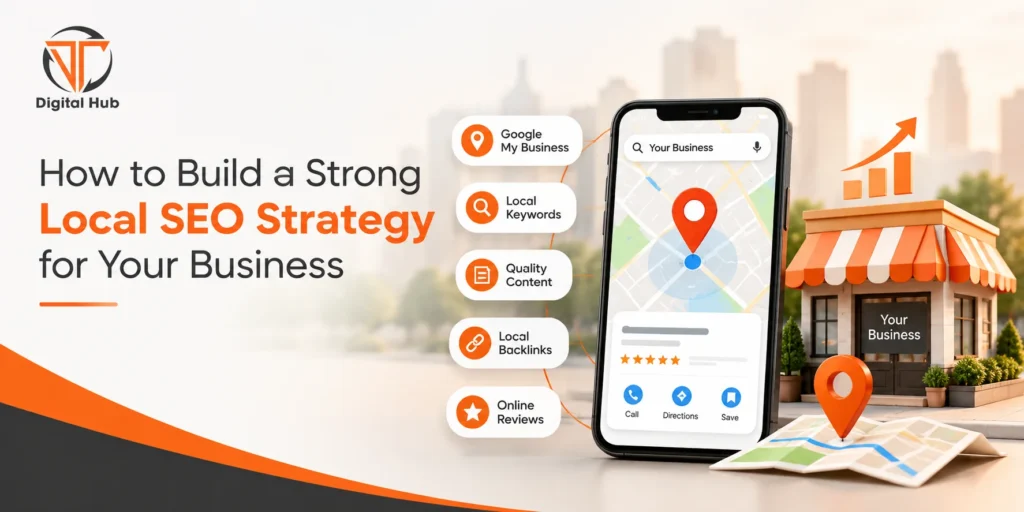
For businesses that serve customers in specific cities or areas, being visible in local search results can make a major difference. People often search for businesses, services, and solutions available near them before making a decision. A strong local SEO strategy helps your business appear when these potential customers are actively looking for what you offer.
Local SEO is not only about adding a city name to your website. It involves optimizing your website, business information, online profiles, content, and local signals so search engines can better understand where your business operates and what services it provides.
Whether you run a small business, service-based company, or growing organization, building a proper local SEO strategy can help improve visibility and bring more relevant visitors to your website.
Understand Your Local Search Audience
Before working on local SEO, understand how your potential customers search for your services.
A customer may search using a service name, location, or both. For example, someone looking for digital marketing support may search for terms such as SEO services in their city, local SEO agencies, or specific SEO solutions.
Understanding these searches helps you identify the keywords and topics that should be targeted on your website.
Identify Location-Based Search Intent
Location-based searches usually have strong intent because the person is often looking for a business they can contact or work with.
Make a list of:
- Your main services
- Cities and areas you serve
- Location-based keywords
- Questions customers commonly ask
- Services people search for in your target locations
This gives you a clearer direction for your local SEO campaign.
Optimize Your Website for Local Search
Your website is an important part of your local SEO strategy. Search engines should be able to understand what your business offers, where you operate, and which users your services are relevant to.
Start by optimizing important website elements such as page titles, meta descriptions, headings, URLs, and service content.
Create Useful Service and Location Pages
If your business serves multiple cities, relevant location pages can help target different local searches.
For example, businesses targeting Madhya Pradesh may create useful pages around services and locations where they actually operate. A page targeting local SEO services in Gwalior should provide information specifically useful to businesses in Gwalior instead of simply replacing a city name on an existing page.
The content should explain the service, local business needs, possible benefits, and relevant information about the target location.
Optimize Your Google Business Profile
A properly optimized Google Business Profile can help your business appear in local search and map results. Make sure your business name, address, phone number, website, business category, working hours, and other important details are accurate and consistent. Regularly adding relevant updates, photos, services, and other useful information can also keep your profile active.
Keep Business Information Consistent
Your business information should remain consistent across your website and important online directories.
Differences in business names, phone numbers, addresses, or other details can create confusion for both users and search engines. Consistency is especially important when building local citations and business listings.
Research the Right Local Keywords
Keyword research is another important part of local SEO. Instead of targeting only broad keywords, focus on terms that match the services you provide and the locations you serve.
For example, a company offering SEO solutions in Madhya Pradesh may target service and location combinations such as SEO service in Indore, depending on whether that location is genuinely part of its service area.
Focus on Search Intent
Do not add location keywords simply to increase keyword density. Consider why someone is searching for that phrase.
Someone searching for “SEO service in Indore” may be looking for a provider, while someone searching for “what is local SEO” may only be researching the topic.
Creating different content for different search intents helps make your website more useful and can support better organic visibility.
Build Relevant Local Citations
Local citations are online mentions of your business that may include information such as your business name, address, phone number, and website.
Relevant business directories, industry-specific platforms, and local listings can help strengthen your online presence.
However, submitting your business to hundreds of random directories is not a good strategy. Focus on quality, relevance, and accurate information.
Choose Quality Over Quantity
A smaller number of trustworthy and relevant listings can be more useful than a large number of low-quality submissions.
Review each platform before creating a listing and make sure it is relevant to your industry or location.
Create Content Around Local Searches
Local content gives you another way to reach people searching for information related to your service and location.
Instead of publishing generic articles repeatedly, create content that answers real questions from your target audience.
For example, a digital marketing company can publish guides about local search trends, website optimization, customer reviews, location-based keywords, or common SEO problems faced by businesses in specific cities.
Make Local Content Useful
Good local content should provide genuine information rather than simply repeating a location name. Mention the location where it makes sense, discuss relevant customer needs, and provide practical information that helps readers make decisions. This approach makes the content more natural while also supporting your broader local SEO strategy.
Build Local and Relevant Links
Backlinks can support your website’s authority, but relevance matters. Look for opportunities to earn links from industry websites, local business publications, associations, directories, community websites, and other relevant sources.
Guest contributions, useful resources, partnerships, and local business collaborations can provide opportunities for relevant links. Avoid focusing only on the number of backlinks. A few relevant and trustworthy links can be more valuable than a large number of unrelated links.
Encourage Genuine Customer Reviews
Customer reviews can influence how potential customers perceive a business. They can also contribute to your overall local search presence.
Encourage genuine customers to leave honest reviews about their experience. Do not create fake reviews or use misleading practices. Instead, make it easy for satisfied customers to share their real feedback.
Respond to Reviews Professionally
Responding to reviews shows that your business pays attention to customer feedback.
Thank customers for positive feedback and respond professionally to genuine concerns. Keep your responses useful and avoid stuffing keywords into every reply.
Track Local SEO Performance
A local SEO strategy should be measured regularly. Without tracking performance, it becomes difficult to understand which activities are producing results.
Monitor important metrics such as organic traffic, local search visibility, keyword positions, website enquiries, phone calls, and actions from your business profile.
Tools such as Google Search Console and Google Analytics can help you understand how users are finding and interacting with your website.
Keep Improving Your Strategy
Local SEO is not a one-time task. Search behaviour, competitors, search engine systems, and customer expectations can change over time.
Review your important pages, business information, local listings, content, reviews, and keyword performance regularly.
DT Digital Hub can use these areas as part of a structured approach to help businesses improve their local search presence and connect with customers in their target locations.
Conclusion
Building a strong local SEO strategy requires more than adding location keywords to a website. It involves understanding local search intent, optimizing your website and business profile, maintaining accurate business information, creating useful local content, earning relevant links, and monitoring performance.
A consistent approach can help businesses become more visible when potential customers are searching for their services. Whether you are targeting one city or multiple service areas, focusing on relevance and user intent is more valuable than simply trying to increase the number of keywords or listings.
With the right process, DT Digital Hub can help businesses build a stronger foundation for local search visibility and long-term organic growth.
Frequently Asked Questions
1. What is a local SEO strategy?
A local SEO strategy is a planned approach to improving a business’s visibility in location-based search results. It can include website optimization, business profile management, local keywords, citations, reviews, content, and relevant backlinks.
2. Why is local SEO important for small businesses?
Local SEO helps small businesses reach people who are searching for relevant products or services in their area. Better local visibility can bring more targeted website visitors, enquiries, calls, and potential customers.
3. How long does local SEO take to show results?
The time required can vary depending on competition, website condition, location, industry, and the work being done. Local SEO generally requires consistent optimization and monitoring rather than expecting immediate results.
4. Should I create separate pages for different locations?
Separate location pages can be useful when a business genuinely serves different areas and each page provides unique, helpful information. Creating duplicate pages with only the city name changed can provide little value.
5. What are the most important parts of local SEO?
Important areas include accurate business information, Google Business Profile optimization, local keyword targeting, website optimization, relevant citations, customer reviews, useful local content, and quality backlinks.